Whether you are remodeling a formal dining room, modernizing a powder room, or creating an expansive two-story entryway, calculating an accurate budget before purchasing lumber is essential for avoiding mid-project surprises.
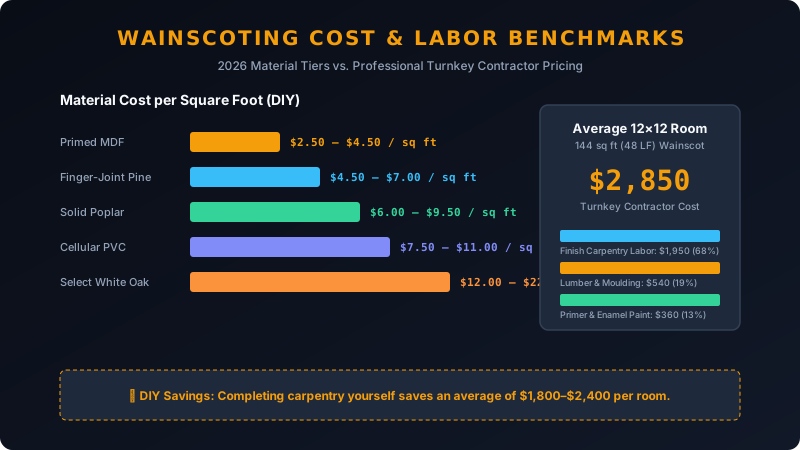
In 2026, national finish carpentry benchmarks indicate that homeowners can expect to invest between $2.50 and $6.50 per square foot for a DIY wainscoting installation, or between $14.00 and $32.00 per square foot for a turnkey, fully painted installation by a licensed trim carpentry contractor.
In this comprehensive budget manual, we break down material substrate price tiers, compare real-world costs across four room archetypes, itemize professional labor rates, expose the five hidden secondary expenses most homeowners overlook, and provide mathematical formulas for estimating lumber take-offs and waste factors.
1. 2026 Material Price Benchmarks by Substrate Tier
Lumber and moulding substrates represent between 45% and 65% of your total material budget. Here is how popular wood species and engineered substrates compare in 2026 national pricing:
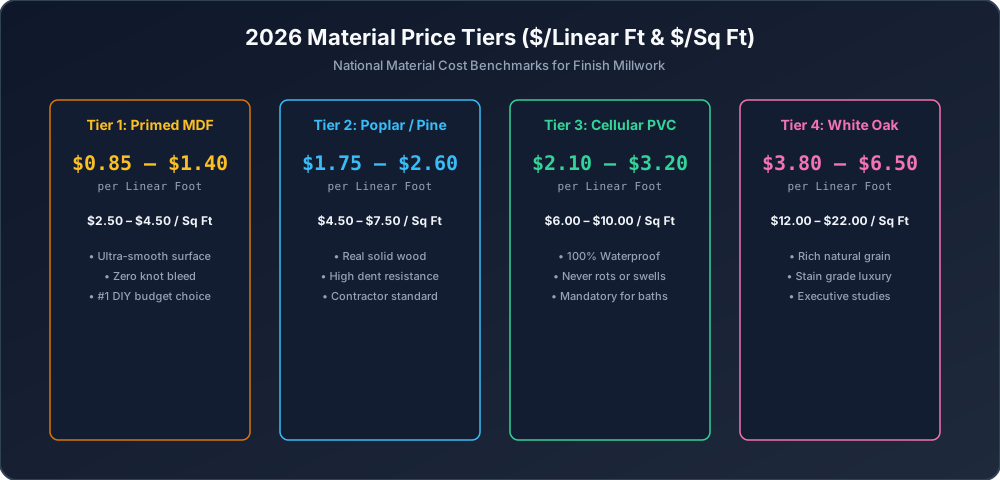
| Substrate Material | Cost per Linear Foot ($/LF) | Material Cost per Sq Ft (36” Wall) | Moisture Rating | Best Recommended Application |
|---|---|---|---|---|
| Primed MDF (Medium-Density Fiberboard) | $0.85 – $1.40 | $2.50 – $4.50 | ⚠️ Dry interior only | Budget-friendly DIY living rooms & master bedrooms |
| Finger-Jointed Primed Pine (FJP) | $1.20 – $1.90 | $4.00 – $6.50 | Moderate | Standard residential dining rooms & hallways |
| Solid Clear Poplar (Hardwood) | $1.75 – $2.60 | $5.50 – $8.50 | High | High-traffic mudrooms, entryways, stairs, kid/pet zones |
| Cellular Extruded PVC | $2.10 – $3.20 | $7.00 – $11.00 | 100% Waterproof | Full bathrooms, walk-in showers, basements, porches |
| Stain-Grade White Oak / Walnut | $3.80 – $6.50+ | $12.00 – $22.00 | High (Sealed) | Executive home offices, wine cellars, historic estates |
2. Real-World Room Cost Estimates (Itemized Benchmarks)
To provide actionable financial planning, here is what standard residential room dimensions cost for typical 36-inch high wainscoting installations across four common architectural scenarios in 2026:
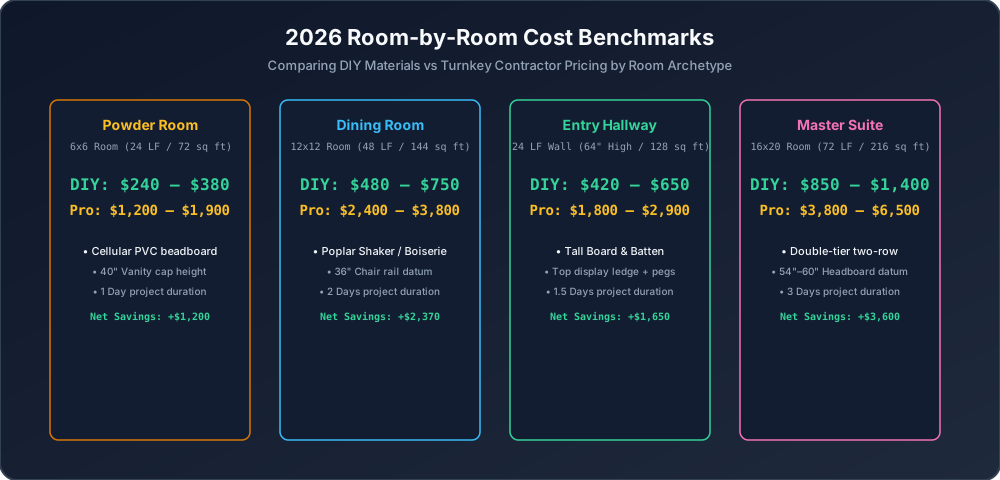
Scenario A: Small Powder Room (6ft × 6ft, 24 Linear Feet = 72 sq ft)
- DIY Material Budget: $240 – $380
- Cellular Extruded PVC beadboard planks or moisture-resistant MDF stiles: $160
- Polyurethane adhesive (1 tube) & elastomeric caulk (1 tube): $18
- 1-1/4” 18Ga finish brads: $10
- 1 Quart premium semi-gloss bathroom enamel: $35
- Electrical outlet box extender (1): $4
- Turnkey Contractor Cost: $1,200 – $1,900 (1 full day of finish carpentry labor + caulking and paint prep)
- Best Style Recommendation: Tongue-and-groove beadboard or flat Shaker wainscoting set at 40.0” vanity height (+2” above backsplash).
Scenario B: Formal Dining Room (12ft × 12ft, 48 Linear Feet = 144 sq ft)
- DIY Material Budget: $480 – $750
- Primed Poplar or FJP trim boards (1×4 stiles, 1×4 top rail, 1×6 baseboards, chair rail cap): $320
- Loctite Power Grab adhesive (2 tubes) & DAP Dynaflex 230 caulk (2 tubes): $35
- Spackle, 220-grit foam sanding block, painter’s tape: $22
- 1 Gallon premium waterborne alkyd trim enamel (Benjamin Moore ADVANCE): $78
- Electrical box extenders (4): $16
- Turnkey Contractor Cost: $2,400 – $3,800 (2 days of carpentry labor + 1 day prep/spray finish)
- Best Style Recommendation: 4-panel or 5-panel Shaker wainscoting or Picture Frame boiserie shadow boxes set at 36.0” chair rail datum.
Scenario C: Long Entryway / High Hallway (24 Linear Feet, 60” High = 120 sq ft)
- DIY Material Budget: $420 – $650
- 1×4 MDF or Poplar vertical battens, 1×4 top rail, 1×2 display shelf ledge: $290
- Construction adhesive (2 tubes) & paintable caulk (2 tubes): $33
- 8 Heavy-duty cast-iron coat hooks with matching screws: $45
- 1 Gallon satin/eggshell interior trim paint: $65
- Turnkey Contractor Cost: $1,800 – $2,900 (High-wall installation, stud anchoring, display ledge corbels, prep/paint)
- Best Style Recommendation: Two-Thirds High-Wall Board & Batten (60” to 64” high).
Scenario D: Large Master Bedroom Suite (16ft × 20ft, 72 Linear Feet = 216 sq ft)
- DIY Material Budget: $850 – $1,400
- 12ft lumber boards for continuous seamless rails, vertical stiles, mid-rails: $580
- Polyurethane adhesive (3 tubes), elastomeric caulk (4 tubes), wood filler: $65
- 2 Gallons premium urethane trim enamel: $155
- Electrical box extenders (6): $24
- Turnkey Contractor Cost: $3,800 – $6,500 (Full carpentry crew, corner scribing, multi-stage spray topcoat)
- Best Style Recommendation: Double-tier two-row or continuous Shaker paneling set at 54” to 60” headboard height.
3. DIY vs. Pro Contractor: Financial Decision Breakdown
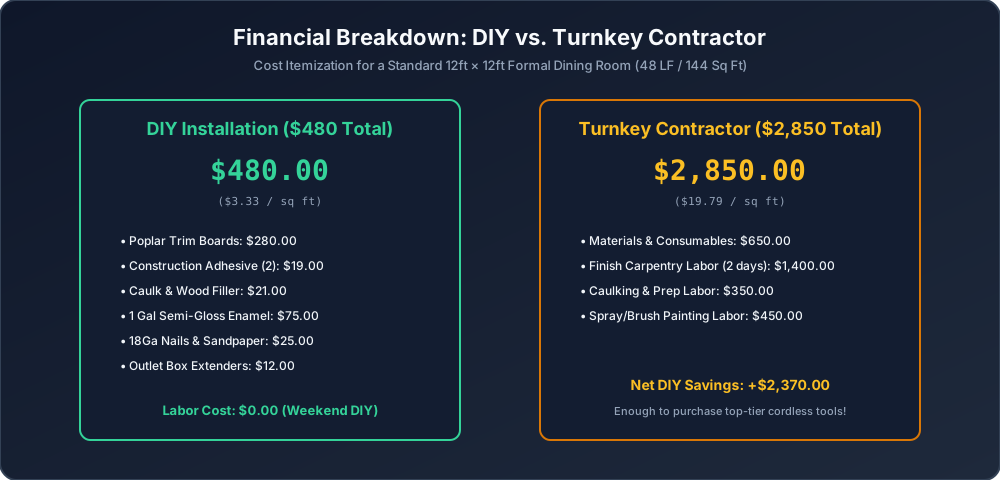
+-------------------------------------------------------------------+
| 12ft x 12ft DINING ROOM FINANCIAL COMPARISON (144 Sq Ft)          |
|                                                                   |
| Turnkey Licensed Contractor Quote:    $2,850.00                   |
| DIY Materials, Lumber & Consumables:   -$480.00                   |
| New Cordless Brad Nailer + Laser Level:-$220.00 (You keep tools!) |
| ----------------------------------------------------------------- |
| NET TAKE-HOME CASH SAVINGS:           +$2,150.00                  |
+-------------------------------------------------------------------+
When to DIY:
- You have basic woodworking skills, access to a compound miter saw, and a free weekend.
- The room has standard 90-degree corners, flat drywall, and level floors.
- You are using pre-primed MDF or finger-jointed poplar trim.
When to Hire a Pro Finish Carpenter:
- Angled Staircases: Cutting compound parallelogram stiles along a 36-degree stair pitch requires advanced trigonometry and custom scribing.
- Curved Walls or Bow Windows: Flexible polyurethane trim bending requires specialized heat guns and steam forms.
- Stain-Grade Hardwoods: White oak and walnut require furniture-grade coped joints with zero tolerance for visible gaps.
4. The 5 Hidden Expenses Most Homeowners Overlook
When building your project budget, avoid surprises by accounting for these essential secondary supplies:
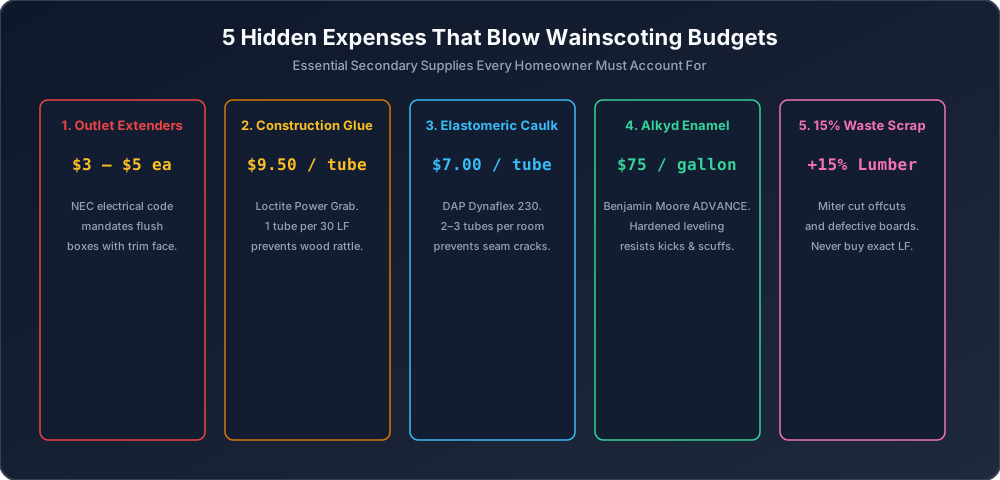
- UL-Listed Electrical Box Extenders ($3.00 – $5.00 each): Adding 3/4” moulding pushes your wall plane outward. National Electrical Code (NEC Section 314.20) mandates that electrical switches and duplex receptacles sit flush with the finished wood trim face. Budget $15–$30 per room.
- Polyurethane Construction Adhesive ($9.50 per tube): Plan for 1 tube of Loctite Power Grab per 30 to 35 linear feet of trim moulding. (Budget $20–$40).
- Paintable Elastomeric Caulk ($7.00 per tube): Budget 2 to 3 tubes of DAP Dynaflex 230 per room to seal all perimeter seams against seasonal hairline cracking. (Budget $15–$25).
- Waterborne Alkyd Trim Enamel ($75.00 per gallon): High-traffic trim requires hardened furniture enamel (Benjamin Moore ADVANCE or Sherwin-Williams Emerald Urethane) to resist chair scuffs and shoe kicks. (Budget $75–$90).
- 10% to 15% Lumber Waste Factor: Always order 10% (for straight walls) or 15% (for rooms with multiple corners) extra linear footage to account for 45-degree miter saw offcuts, defect trimming, and end-squaring.
5. Master Take-Off Formulas: How to Calculate Exact Linear Footage
To ensure you never run short of lumber in the middle of a weekend project or overpay for excess inventory, master finish carpenters use the following mathematical take-off formulas:
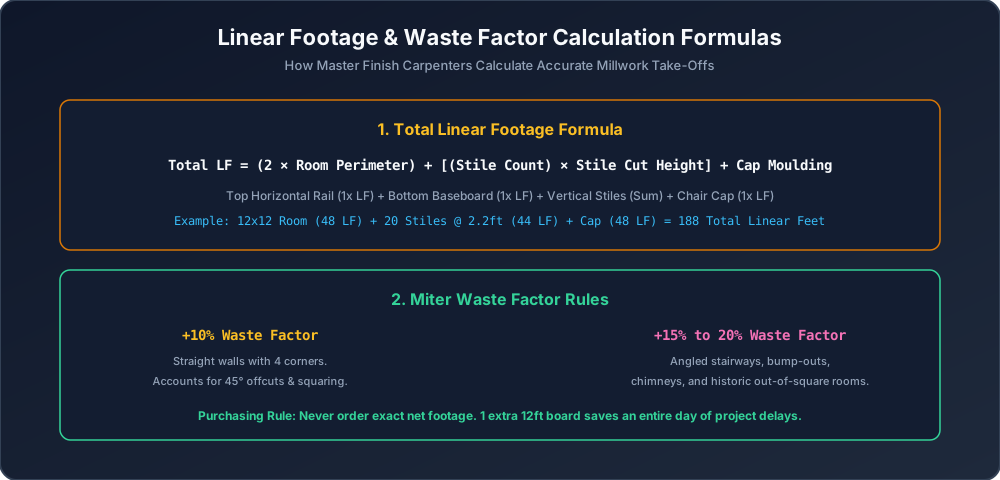
1. Total Linear Footage Formula:
Total Linear Footage = (2 × Room Perimeter) + (Stile Count × Stile Cut Height / 12) + Cap Moulding Footage2. Symmetrical Board Optimization:
- Top and Bottom Rails: Buy 12-foot or 16-foot boards whenever possible. Running a continuous 12ft rail across a wall eliminates visible joint seams and cuts installation time in half.
- Vertical Stiles: If your cut stile height is 26.25 inches, a standard 8-foot (96”) board will yield exactly 3 full stiles with 17.25 inches of scrap (96” - (3 × 26.25”) = 17.25” scrap). Factor this yield into your board count.
6. Contractor Quote Evaluation Checklist
If you decide to hire a finish carpentry contractor, evaluate their written estimate against this quality checklist before signing:
- Specified Lumber Species: Does the quote explicitly state “Solid Clear Poplar” or “Pre-Primed MDF” rather than vague “wood trim”?
- Corner Joinery Method: Does the contractor specify coped inside corners or mitered inside corners? (Coped is mandatory for master quality).
- Fastening Method: Does the scope include both polyurethane adhesive and 18-gauge brad nails?
- Electrical Code Compliance: Does the contractor include installing UL-listed electrical box extenders for all switches and outlets?
- Paint Prep & Primer: Is perimeter elastomeric caulking and two coats of urethane trim enamel included in the turnkey price?
Master Carpenter FAQ: Wainscoting Cost
Q1: Is wainscoting cheaper than tile in a bathroom?
Yes! A standard tile installation costs $18.00 to $45.00 per square foot due to mortar, waterproofing membranes, grout, and tile-setter labor. Cellular PVC beadboard or Shaker wainscoting costs only $6.00 to $10.00 per sq ft (DIY) and installs in hours rather than days.
Q2: What is the labor rate for a finish carpenter per hour?
In 2026, licensed finish trim carpenters charge between $65.00 and $110.00 per hour (or a daily rate of $550 to $900 per carpenter), depending on your metropolitan region and project complexity.
Q3: Does wainscoting increase home value?
Yes. Professional architectural millwork consistently provides an estimated 70% to 90% return on investment (ROI) at resale. Home appraisers recognize custom wainscoting as a luxury feature that differentiates listings in competitive housing markets.
Q4: How much does a DIY tool setup cost if I start with zero tools?
An entry-level DIY tool kit (Ryobi 18Ga Cordless Brad Nailer $129, Metabo HPT 10” Compound Miter Saw $149, Huepar 360° Green Laser Level $89, Stabila Level $49) totals approximately $416.00. Because a contractor charges $2,400+ for labor, you save over $1,900 even after buying all brand-new power tools!
Estimate Your Exact Room Costs in Seconds
- Wainscoting Cost Calculator — Itemize lumber, adhesive, caulk, paint, and labor budgets.
- Wainscoting Material Calculator — Optimize board counts with an active 10% or 15% waste factor.
- Wainscoting Layout Calculator — Generate scaled 2D wall elevations and cumulative 0-inch tape schedules.